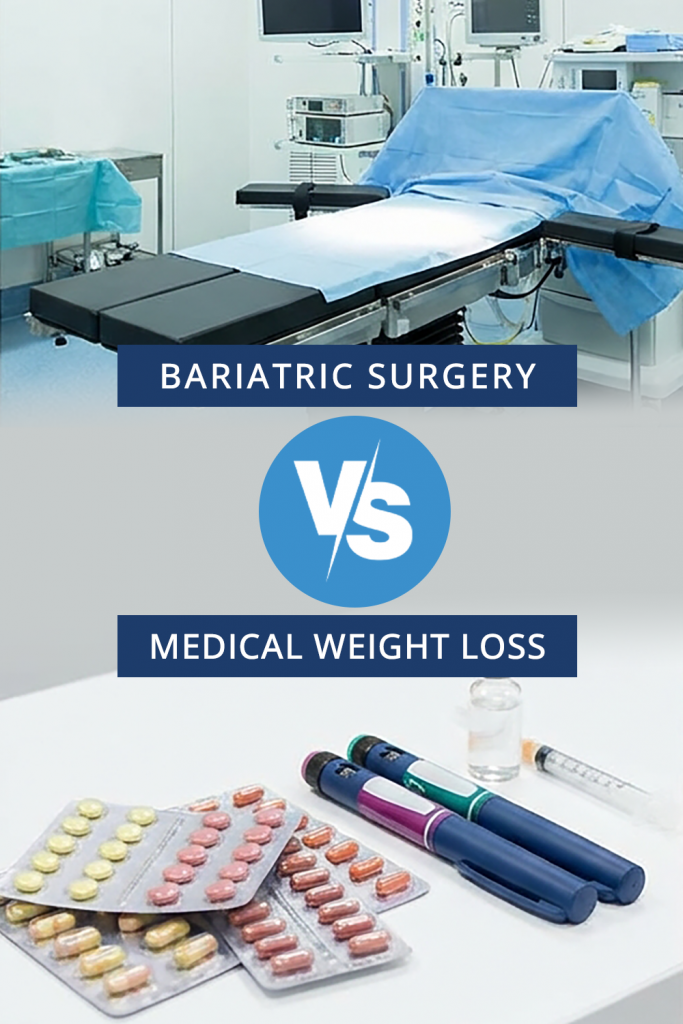

Bariatric Surgery vs Medical Weight Loss: Which One is Right for You?
January 26, 2026Bariatric Surgery vs Medical Weight Loss: Obesity affects a large portion of the United States population and is prevalent in both adolescents and adults, men and women. Data from the Center for Disease Control demonstrates an increasing prevalence of obesity in U.S. adults from 30.5% in 2000 up to 42.4% in 2018 (1). Obesity is defined using the BMI, or body mass index, which quantifies a person’s excess weight through a calculation based on their height and weight. A BMI equal to or above 30 is defined as obese. The BMI does have its limitations, as it does not take into account a person’s sex, age, race, or body fat percentage. However, it is an easy-to-use tool that helps us correlate excess weight with risk of certain chronic health conditions, such as diabetes, heart disease, stroke, certain lung diseases, certain cancers, infertility, and arthritis, to name a few.
The goal of all weight loss plans is to decrease the BMI and weight to a healthier range, and as a result, improve these related medical conditions.
Lifestyle modification is the first-line treatment for overweight and obese patients. This involves a plan that combines healthy eating with increased physical activity. The goal of such a plan would be to decrease caloric intake from food while simultaneously increasing the calories that are used by being more active. Working with a weight management doctor can help create a plan that is tailored to the individual and is closely monitored over time. Studies have shown that diet and exercise plans help achieve total weight loss of 3-6% over the long-term (2), which, although beneficial in many ways, may not be adequate for some patients.
Medical Weight Loss
The addition of weight loss medication to diet and exercise plans can provide further weight loss in those who suffer from obesity. Weight loss medications are FDA approved for those patients with a BMI of 30 or above, or those with a BMI of 27 or above with at least one weight-related medical comorbidity. Medication options vary from those that are taken orally versus those that are self-injected.
An oral medication, such as orlistat, functions to change the gastrointestinal digestion and absorption of certain types of foods. Other options, like phentermine-topiramate or naltrexone-bupropion, affect appetite signals to the brain. In general, the oral anti-obesity medications can lead to 4-8% average weight loss, slightly better than diet and exercise alone. They commonly cause side effects such as changes in stool consistency, constipation, nausea, and sometimes heart-related problems.
The injectable medications, known as GLP-1 receptor agonists, act slightly differently on the body to achieve weight loss. These are hormone-based medications that alter appetite signaling to the brain and have significant cardiac and metabolic weight loss benefits (3). Liraglutide, semaglutide, and tirzepatide are three such medications that provide 5%, 12%, and up to 21% weight loss, respectively. They also have potential side effects, including nausea, constipation, diarrhea, and fatigue most commonly.
Bariatric Surgery
Weight loss (bariatric) surgery has proven to be the most effective long-term treatment option for those with obesity. Those with a BMI of 40 or above, or those with a BMI of 35 and above with a weight-related comorbidity, qualify for weight loss surgery. Bariatric surgery helps achieve weight loss through restricting the amount of food a person can eat at a given time, hormonal changes that influence appetite, or altering the digestion of nutrients absorbed from food. Some surgical procedures can provide multiple weight loss approaches. Studies demonstrate an average total weight loss of 25-32% (4), depending on the type of bariatric surgery performed. Five years post-surgery, average weight loss is maintained around 23% (5), highlighting the long-term weight loss benefit of bariatric surgery.
All weight loss plans should include lifestyle changes that promote healthier eating and increased exercise activity. These habit changes are crucial for improved outcomes and long-term success.
But who would benefit from a surgical approach to weight loss compared to a medication approach? BMI plays a role, as the criteria for bariatric surgery is more stringent. Although overall safe procedures, bariatric surgery still poses an increased risk of surgical complications when compared to non-surgical options. However, the increased weight loss benefit of surgery compared to anti-obesity medications should remain a significant factor in decision-making. Similarly, there are many challenges to prescribing anti-obesity medications. These medications are often costly and are not widely covered by private insurance plans nor Medicare. There have been global shortages of many medications, specifically the GLP-1 receptor agonists, due to a recent rise in their use (6). Severe side effects may also limit use in some patients. We also know that some patients are non-responders, achieving only a small percentage of total weight loss. Data on long-term use of anti-obesity medications for weight loss maintenance is still unfolding, and weight regain is common after discontinuation (6).
In summary, obesity is a complex medical condition that requires a multidimensional treatment plan. In those patients who qualify for weight loss surgery based on BMI and comorbidities, surgical options are often superior, as they can lead to more significant weight loss and added metabolic health benefits (7). Anti-obesity medications are more effective now than in the past with the introduction of GLP-1 agonists, allowing excellent nonsurgical options for those that are too high risk for surgery. Oftentimes, however, these treatment options can be used in conjunction for added benefit and more significant medical improvements.
References
- Hales CM, Carroll MD, Fryar CD, Ogden CL. Prevalence of obesity and severe obesity among adults: United States, 2017–2018. National Center for Health Statistics Data Brief 360. Centers for Disease Control and Prevention. February 27, 2020.
- Marion J Franz 1, Jeffrey J VanWormer, A Lauren Crain, Jackie L Boucher, Trina Histon, William Caplan, Jill D Bowman, Nicolas P Pronk. Weight-loss outcomes: a systematic review and meta-analysis of weight-loss clinical trials with a minimum 1-year follow-up. J Am Diet Assoc. 2007 Oct;107(10):1755-67.
- Gudzune, KA. Kushner, RF. Medications for Obesity: A Review. JAMA. 2024 Aug 20;332(7):571-584.
- Ragavan S, Elhelw O, Majeed W, Alkhaffaf B, Senapati S, Ammori B, Mudaliar R, Syed A. Weight Loss Following Bariatric Surgery in People with or without Metabolic Syndrome: A 5-year Observational Comparative Study. J Clin Med. 2024 Jan 1;13 (1):256.
- Sohan PR, Mahakalkar C, Kshirsagar S, Bikkumalla S, Reddy S, Hatewar A, Dixit S. Long-Term Effectiveness and Outcomes of Bariatric Surgery: A Comprehensive Review of Current Evidence and Emerging Trends. Cureus. 2024 Aug 9;16 (8).
- Elmaleh-Sachs A, Schwartz JL, Bramante CT, Nicklas JM, Gudzune KA, Jay M. Obesity Management in Adults: A Review. JAMA. 2023 Nov 28;330 (20): 2000-2015.
- Klair N, Patel U, Saxena A, Patel D, Ayesha IE, Monson NR, Ramphall S. What is Best for Weight Loss? A Comparative Review of the Safety and Efficacy of Bariatric Surgery Versus Glucagon-Like Peptide-1 Analogues. Cureus. 2023 Sep 29;15(9).
 | ABOUT THE AUTHOR Dena Arumugam, MD, is a board-certified general surgeon who specializes in minimally invasive surgery, general surgery and bariatric surgery. She earned her medical degree at the Albert Einstein College of Medicine and completed a general surgery residency at Rutgers Robert Wood Johnson Medical School. She refined her laparoscopic surgery skills at New York University Winthrop Hospital with fellowship training in advanced gastrointestinal and bariatric surgery, before returning to New Jersey to practice at Hackensack Meridian Health - Jersey Shore Univ Med Ctr. |