
Best Supplements to Preserve Muscle While on GLP-1
March 23, 2026This article is derived from the session “Preserving Muscle Mass During GLP-1 Therapy: Nutrition and Integrative Approaches” presented by Dr. Jaclyn Leong, Medical Director of the UCI Health Weight Management Program, at the ObesityHelp 2025 National Conference, where she discussed evidence-based nutrition, resistance training, and integrative strategies to support lean body mass during GLP-1 therapy.
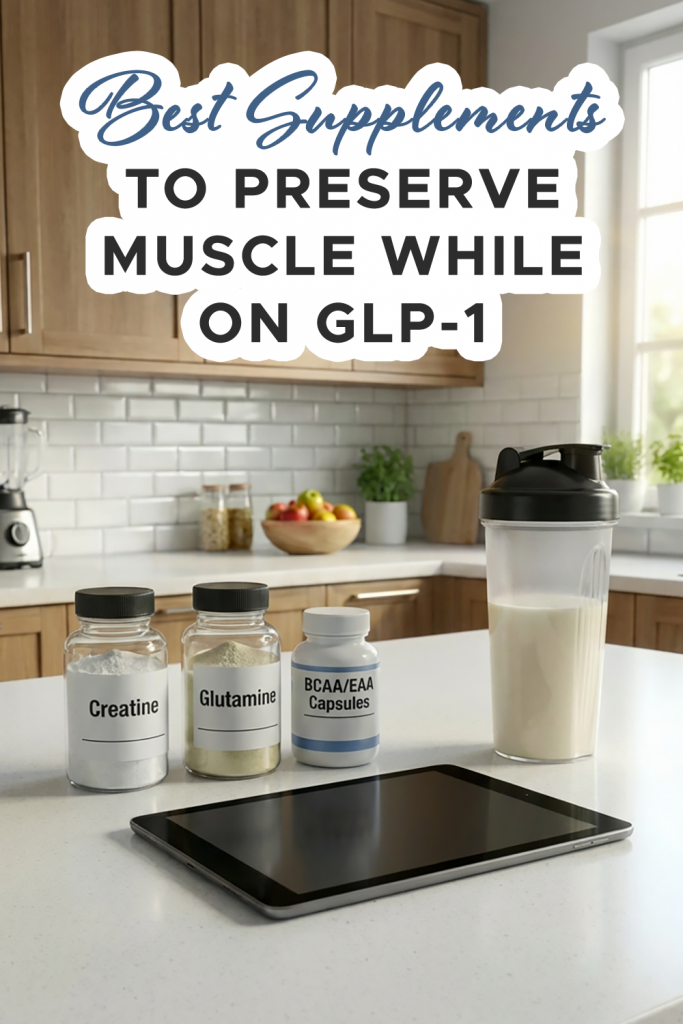
GLP-1 medications are powerful tools for weight management. While nutrition and resistance training form the foundation of muscle preservation, Dr. Leong also explored nutraceuticals that may provide additional support.
Dr. Leong emphasized an integrative approach. Supplements are not a replacement for proper nutrition and resistance training, but they may provide additional support when layered onto a strong lifestyle foundation.
Glutamine: Supporting Recovery and Metabolic Health
Glutamine is the most abundant free amino acid in the body and is considered conditionally essential. While the body can produce it, times of stress, illness, or metabolic demand may increase the need beyond what the body supplies.
Glutamine plays a role in:
- Gut health
- Immune function
- Protein synthesis
- Metabolic balance
Dr. Leong explained that glutamine may help preserve muscle and support recovery, particularly after exercise. It has also been studied in individuals with type 2 diabetes, where it may help reduce post-meal glucose levels.
Because GLP-1 therapy often coincides with reduced caloric intake and increased metabolic demand, supporting recovery becomes especially important.
Typical dosing discussed in clinical settings is about 5 grams once or twice daily, often taken pre- or post-exercise.
She also noted that individuals with kidney or liver disease should be medically supervised before supplementing.
Branch Chain and Essential Amino Acids: Activating Muscle Protein Synthesis
Dr. Leong reviewed the difference between branch chain amino acids (BCAAs) and essential amino acids (EAAs). BCAAs include leucine, isoleucine, and valine. Leucine plays a central role in activating mTOR, the molecular signal that stimulates muscle protein synthesis.
“Leucine actually particularly increases mTOR. So it stimulates mTOR to build more muscle.”
Dr. Leong used a construction analogy to explain the difference between branch chain amino acids and essential amino acids.
Think of it this way:
- Branch chain amino acids turn on the construction crew.
- Essential amino acids provide the building materials needed to build new muscle tissue.
Typical dosing ranges include 5 to 10 grams of BCAAs per day, ensuring adequate leucine intake, and 10 to 15 grams of essential amino acids daily. Balance is important, as relying exclusively on BCAAs without sufficient essential amino acids may limit muscle-building potential.
Creatine: Strength, Performance, and Emerging Cognitive Benefits
Creatine is one of the most researched supplements for muscle performance and strength. It is naturally produced from amino acids and stored primarily in skeletal muscle, where it plays a critical role in energy production.
Dr. Leong explained its primary function clearly:
“It helps enhance ATP regeneration, improving performance.”
ATP is the body’s immediate energy source for short bursts of strength and high-intensity activity. By supporting ATP regeneration, creatine may help:
- Increase strength and power
- Improve training capacity and intensity
- Support lean body mass development
- Reduce exercise-related muscle damage
Beyond muscle, Dr. Leong also discussed emerging research on neurological and cognitive benefits, including potential support for brain energy metabolism and memory in adults.
Creatine is commonly dosed at 3 to 5 grams per day. While some individuals use loading phases, Dr. Leong noted that gradual daily dosing can achieve muscle saturation over time and may reduce side effects.
She also clarified an important lab consideration. Creatine may slightly increase creatinine levels in bloodwork. This reflects normal metabolism of creatine and does not necessarily indicate kidney damage. Individuals with pre-existing kidney disease should consult their healthcare provider before supplementing.
The Bottom Line on Supplements and GLP-1 Therapy
Dr. Leong emphasized that adequate protein intake, structured resistance training, recovery, and sleep remain the core strategies for maintaining lean body mass during GLP-1 therapy.
Nutraceuticals like glutamine, amino acids, and creatine may enhance recovery and performance when used to complement consistent nutrition and resistance training.
Supplements can support muscle preservation, but they are not a substitute for foundational habits.
Frequently Asked Questions
Q1: Do I need supplements if I eat enough protein?
Not necessarily. Whole foods and adequate protein intake should be prioritized. Supplements may provide additional support, especially around training or recovery.
Q2: Is creatine safe for women and older adults?
Current research suggests creatine is generally safe when used appropriately and may benefit postmenopausal women and aging adults. Individuals with kidney conditions should consult their provider.
Q3: Can amino acids replace resistance training?
No. Amino acids can support muscle protein synthesis, but resistance training remains the primary stimulus for preserving and building muscle.
Dr. Jaclyn Leong is a triple-boarded physician in the disciplines of internal medicine, integrative medicine, and obesity medicine and currently serves as the Medical Director of the UCI Health Weight Management Program
Watch the full video of Dr. Jaclyn Leong's session below!
 | ABOUT THE AUTHOR Dr. Jaclyn Leong is a triple-boarded physician in the disciplines of internal medicine, integrative medicine, and obesity medicine. She currently serves as the Medical Director of the UCI Health Weight Management Program, where she leads comprehensive, patient-centered care that supports sustainable health transformation. |